
Rising GDP growth, deepening European integration through Schengen and the euro, and a generation-driven democratic revival, yet still shadowed by the legacies of past political and economic struggles. Bulgaria’s story is one of resilience, ambition, and untapped potential.
A Country Tested by History
Bulgaria is preparing to mark two decades of European Union membership, a milestone that arrives carrying both pride and the weight of unfulfilled promise. Joining the EU in 2007 alongside Romania, Bulgaria was, for many in Brussels and beyond, a country defined by potential rather than performance. Two decades on, the country continues to carry that characterisation, yet the evidence on the ground suggests the narrative is rapidly shifting.
The transition out of communism was neither swift nor clean. Polemics have circulated around that Bulgaria failed to establish the institutional architecture necessary for a functioning democracy: robust checks and balances, an independent judiciary, credible anti-corruption mechanisms, and the conditions required for a genuinely free market economy. Oligarchic networks entrenched themselves in the early years of the post-communist order, and for much of the subsequent three decades, the line between political power and private interest remained dangerously blurred.
The country has faced successive shocks that would have tested far more established democracies. The 2008 financial crisis produced political shocks that swept a new ruling elite into power, one that, directly or through shifting coalition arrangements, would dominate Bulgarian politics for the following years. In 2015, Bulgaria found itself on the front line of Europe’s migration crisis, its border with Turkey placing it at the forefront of one of the continent’s most testing humanitarian and political challenges. In 2020, COVID-19 struck with familiar brutality. And in the years since, the fracturing of the multilateral international order, above all, the consequences of Russia’s war in Ukraine, has exposed the vulnerabilities of small states caught between competing geopolitical forces.
A Democratic Awakening
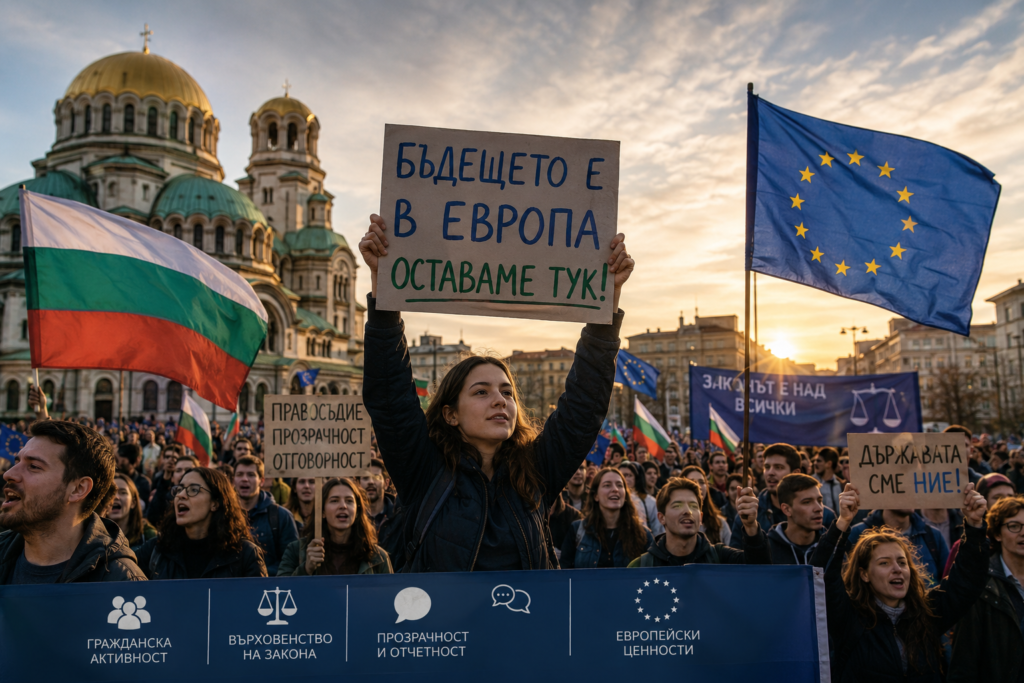
Against this backdrop, something unexpected has taken shape. Bulgaria has, in recent years, experienced what can only be described as a democratic awakening, and it seems to be its driving force mobilised through the country’s younger generation.
Sustained street protests, stretching across the better part of the last five years, have sent governments tumbling with a frequency that alarmed commentators and emboldened citizens in equal measure. The squares of Sofia, Plovdiv, and Varna have filled with thousands of Bulgarians, many of them young, many of them first-time protesters, who were demanding accountability, the restoration of the rule of law, and a genuine break with the patterns of governance that had calcified around the political class.
Bulgaria’s younger generation has demonstrated something rare in European politics today: the capacity to sustain civic pressure until it produces structural change.
This civic energy has not dissolved into cynicism, as protest movements in the region so often do. Instead, it has fed into a broader cultural and political shift: a renewed sense of ownership over the country’s direction, a growing urge for more transparency, and an emerging generation of civil society actors, entrepreneurs, and political figures who are orienting Bulgaria firmly towards its European partners and values.The question of whether political stability can be maintained remains open. Some of the figures now at the centre of Bulgarian politics carry histories that invite scrutiny. Yet the deeper question is one that Bulgarians themselves are actively debating: whether imperfect stability, under leaders who may carry the baggage of the past, is preferable to the paralysing cycle of electoral volatility that has characterised much of the past decade. It is not a simple calculus, and reasonable people reach different conclusions. What is clear is that the country’s citizens are no longer passive bystanders in this debate.
Integration Milestones: Schengen and the Euro
Amid the political turbulence, two structural achievements stand out as defining markers of Bulgaria’s European journey, achievements that carry consequences well beyond the symbolic.
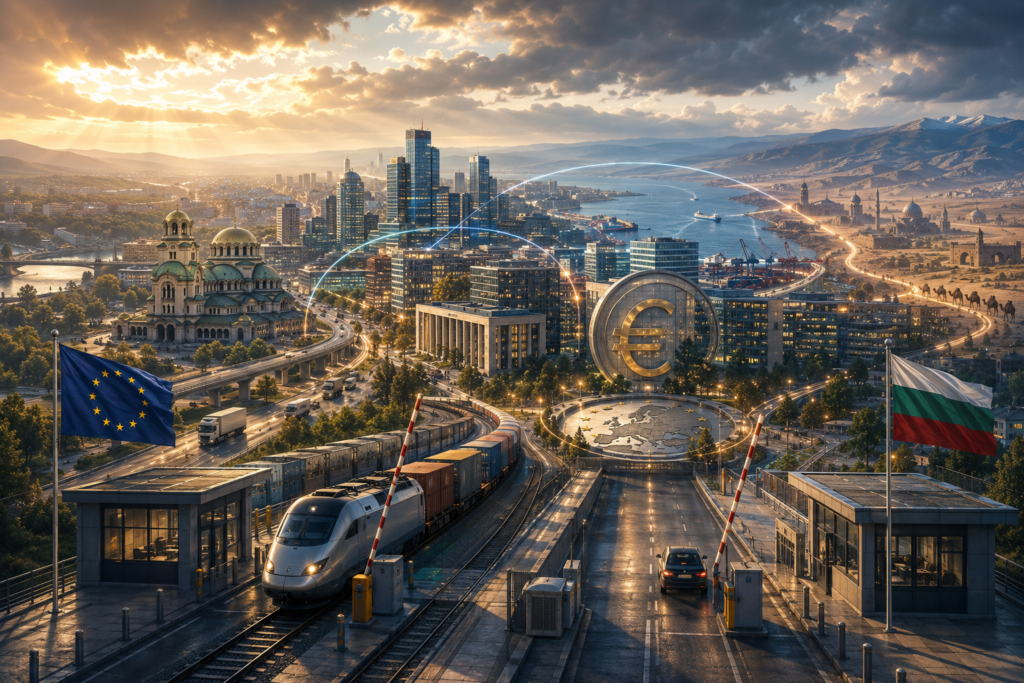
Bulgaria’s full accession to the Schengen Area represents a watershed moment in the country’s European integration. For years, Bulgaria’s exclusion from Schengen was a source of both practical inconvenience and political frustration, a visible reminder of the second-tier status that the country occupied within the EU’s internal architecture. Membership has changed that calculus. The easing of movement across borders has tangible consequences for tourism, for trade, for the day-to-day lives of Bulgarian citizens and businesses, and for the country’s attractiveness as a destination for foreign investment. Bulgaria’s geostrategic position, at the intersection of Europe, the Middle East, and Central Asia, amplifies the value of this development considerably.
The adoption of the euro, meanwhile, represents an equally significant structural shift. The removal of transaction costs, the alignment of monetary policy with the eurozone, and the enhanced credibility that euro membership confers on the Bulgarian economy collectively lower barriers for investment, trade, and financial flows. For a small, open economy with Bulgaria’s profile, these are not marginal gains but a representation of a structural improvement in the conditions for sustainable growth.
Neither achievement came easily, and neither should be taken for granted. Both required years of sustained reform efforts, the accumulation of credibility with European partners, and the political will to push through changes that were domestically contested. The fact that the latter has been achieved (and achieved against a backdrop of considerable political instability) speaks to a degree of institutional resilience that is frequently overlooked in external assessments of the country.
Economic Potential and the Path Forward
Bulgaria’s economic trajectory in the post-pandemic period has drawn increasing attention from investors, analysts, and policymakers across Europe. The country’s GDP growth has consistently outperformed the EU average in recent years, driven by a combination of domestic consumption, expanding service sectors, and a technology and outsourcing industry that has quietly established Sofia as one of Central and Eastern Europe’s more compelling IT hubs.
The country’s cost competitiveness remains a significant structural advantage. Alongside it, a well-educated workforce, particularly in engineering, mathematics, and technology disciplines, has attracted a growing number of multinational firms looking to establish or expand their European operations. The infrastructure of connectivity that Schengen membership reinforces only strengthens this proposition.
At the same time, significant structural challenges remain. The rule of law deficit, while improving, continues to weigh on the business environment and on Bulgaria’s relationship with European institutions. Demographic pressures, driven by emigration and an ageing population, represent a long-term challenge to economic sustainability that no amount of short-term investment momentum can resolve without deeper policy interventions. And the country’s exposure to the geopolitical volatility of its neighbourhood introduces elements of uncertainty that responsible economic planning cannot be ignored.
What is emerging, however, is a country that is beginning to develop a coherent account of its own competitive position within the European economy. The ambition to become a hub for the broader Balkan region reflects a strategic clarity that has not always been present in Bulgarian policymaking.
Culture, Visibility, and the Eurovision Moment
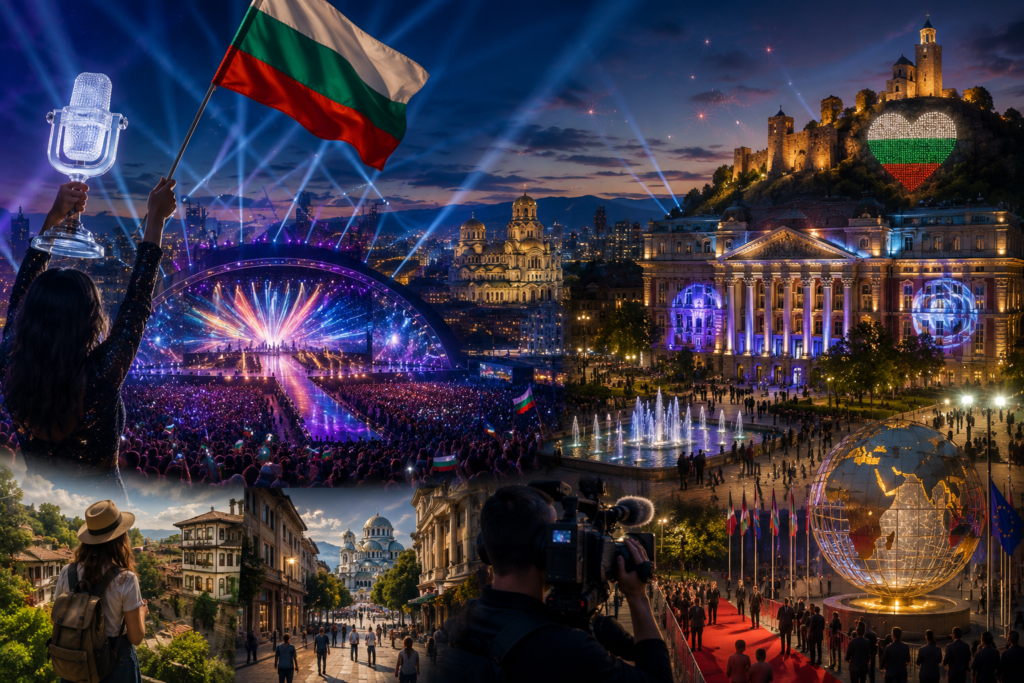
Bulgaria’s global visibility is set to receive an unexpected but powerful boost. Following a decisive victory at the Eurovision Song Contest, the country is scheduled to host the next edition of the competition, posing a logistical and organisational challenge of considerable scale, but also an opportunity of corresponding magnitude.
Eurovision is, by any measure, one of the most watched live television events on the planet. Hosting it directs an extraordinary volume of international attention towards the host country: tourism flows, media coverage, cultural diplomacy, and brand visibility all amplify in ways that are difficult to engineer through conventional means. For a country like Bulgaria, one that has historically struggled to control its own narrative on the international stage, this represents a genuinely significant soft power moment.
The question, of course, is whether Bulgaria can rise to the organisational demands that hosting entails. The scale of the event, the infrastructure requirements, the coordination between public and private actors, and the management of international expectations will all test the country’s institutional capacity in ways that extend well beyond the cultural sphere. The challenge is real, but so is the opportunity. How Bulgaria navigates it will say something important about the country’s readiness for a larger role on the European stage.
A Strategic Asset the EU Cannot Afford to Ignore
Bulgaria’s geopolitical importance is not a recent discovery, but it is one that is receiving renewed attention in the context of a rapidly evolving European security environment. The country’s position on the eastern flank of NATO and the EU, its proximity to Turkey, its historical and cultural ties to the Balkans and the Black Sea region, and its role as a transit state for energy and trade flows all combine to make it a strategically significant actor in ways that are sometimes disproportionate to its size.
The fracturing of multilateralism and the resurgence of great-power competition have, paradoxically, elevated the strategic importance of smaller states positioned at the intersection of competing interests. Bulgaria finds itself in precisely this position. Its defence industrial potential, its emerging technology sector, and its role in regional infrastructure connectivity are all assets that carry real strategic value for the EU as it seeks to strengthen its own resilience and reduce dependencies across critical sectors.
The relationship between Bulgaria and its EU partners is, at this moment, one that calls for genuine reciprocity. Bulgaria has demonstrated through the protests of its citizens, through its institutional reforms, through its euro and Schengen memberships a genuine commitment to the European project that goes beyond the transactional and project-based. It is now incumbent on the EU to engage with Bulgaria as a strategic partner rather than a managed periphery. The country’s strengths are real; making use of them is as much an obligation for Brussels as it is an opportunity for Sofia.
Conclusion: Affirming a European Vocation
Bulgaria’s story is not one of linear progress. It is the story of a country that has absorbed successive shocks, navigated genuine crises, and emerged, battered, but structurally intact with its European vision not only preserved but, if anything, deepened. The democratic energy of its younger generation, the structural achievements of Schengen and euro membership, the quiet accumulation of economic momentum, and the growing recognition of its strategic importance all point in the same direction.
The challenges that remain are not trivial. Governance reform, demographic resilience, and the management of geopolitical exposure will define the terms of Bulgaria’s development for years to come. Words and media rhetoric must give way to consistent, verifiable action.
The foundations for a different kind of story are in place. A rising tiger on the eastern edge of Europe: not yet fully arrived, not without its contradictions, but unmistakably in motion. Whether Bulgaria seizes this moment, and whether its European partners recognise what is at stake will be among the defining questions of the decade ahead.
Disclaimer: The content, concepts, composition, and structure in this article are original work of the author and editorial team. The images featured are intended solely for illustrative purposes and were generated using artificial intelligence.
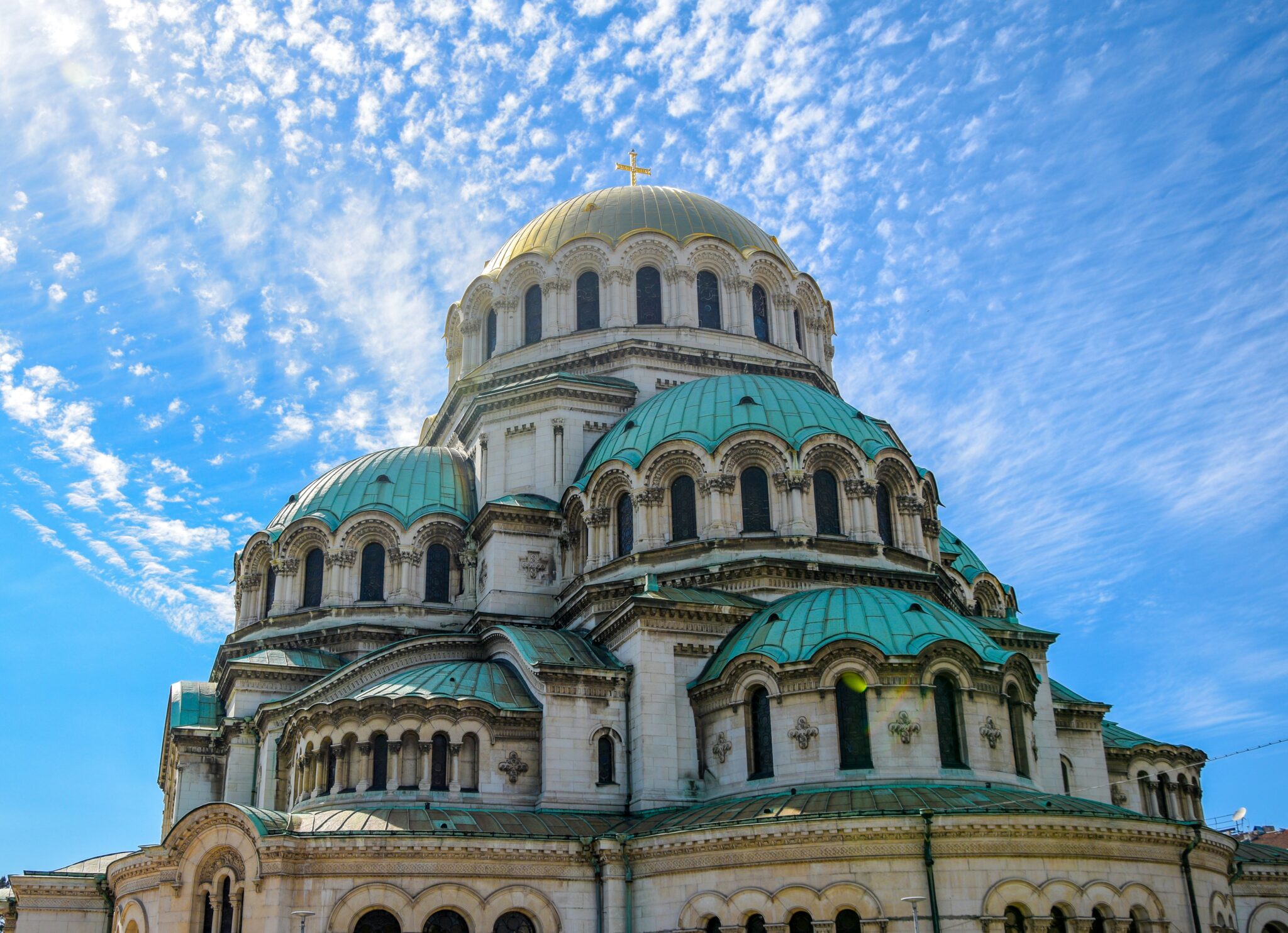
Featured image is original work: The cathedral in all its might by Ivan Nedelchev.