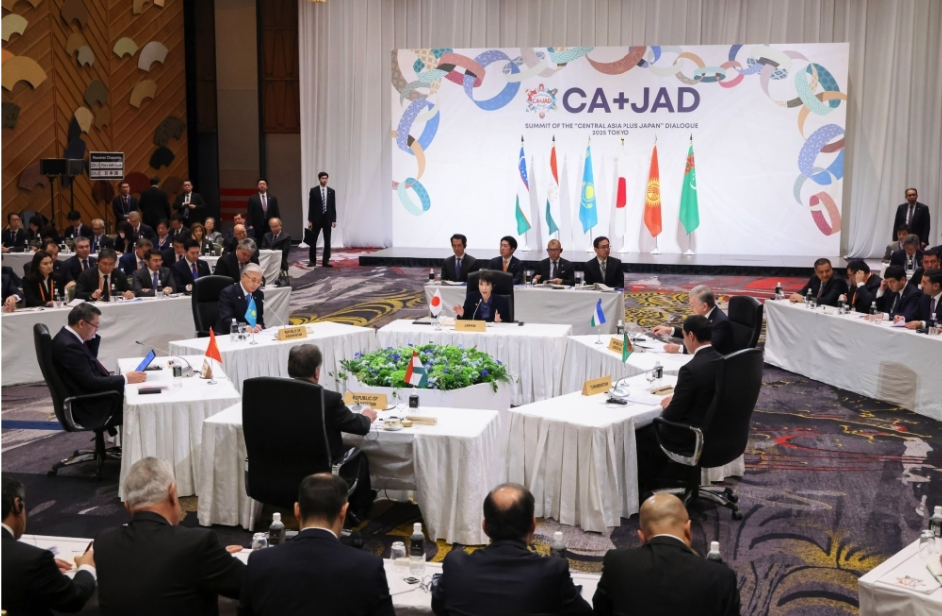

The recent leaders’ summit between the five Central Asian states—Kazakhstan, Kyrgyzstan, Tajikistan, Turkmenistan, and Uzbekistan—and Japan represents a significant development in contemporary Eurasian diplomacy. Held in Tokyo, the meeting marked the first time the long-established Central Asia + Japan framework was elevated to the level of heads of state and government, reflecting the growing strategic relevance of the partnership.
The summit took place in a context of increasing global attention to Central Asia, a region historically positioned at the intersection of civilizations and today emerging as a key actor in transcontinental connectivity, energy security, and geopolitical balance. Japan’s decision to host the summit at the highest level signals an intention to deepen engagement through a model of cooperation characterized by continuity, mutual respect, and long-term vision.
Japan’s Diplomatic Approach to Central Asia
Japan’s engagement with Central Asia has traditionally emphasized stability, development, and institution-building. Since the launch of the Central Asia + Japan dialogue in 2004, cooperation has focused on economic assistance, infrastructure, education, and capacity building, rather than short-term political alignment.
At the Tokyo summit, this approach was reaffirmed through discussions on sustainable energy, critical resources, technological cooperation, innovation, and regional connectivity. Emphasis was placed on diversification of supply chains, responsible development, and human-centered economic growth—areas in which Japanese expertise and long-term investment strategies are particularly prominent.
The diplomatic tone of the summit reflected principles deeply embedded in Japanese statecraft, including harmony, patience, and incremental trust-building. Rather than producing immediate or highly publicized outcomes, the meeting focused on reinforcing frameworks for sustained cooperation.
Cultural and Symbolic Dimensions
In addition to policy discussions, the summit incorporated symbolic and ceremonial elements that underscored the importance of cultural diplomacy. High-level meetings, traditional protocols, and references to historical ties along the Silk Road highlighted a shared recognition of history as a foundation for modern partnership.
Such symbolism plays a significant role in Japan’s external relations, particularly in regions with strong civilizational identities. In the context of Central Asia, cultural sensitivity and respect for sovereignty contribute to an environment conducive to stable and diversified partnerships.
Regional and International Implications
The Central Asia–Japan summit forms part of a broader pattern of high-level engagement between Central Asia and major global actors, including the European Union, China, the United States, and regional powers. Japan’s participation adds a distinct dimension to this landscape, offering an engagement model that is non-exclusive, development-oriented, and consistent with the multi-vector foreign policies pursued by Central Asian states.
From a wider perspective, the summit illustrates how middle and major powers can engage Central Asia through cooperative frameworks that prioritize predictability, institutional dialogue, and mutual benefit, rather than competitive alignment.
A Constructive Path Forward
The Central Asia–Japan summit in Tokyo represents a positive step in strengthening long-term cooperation between the two sides. By advancing dialogue at the leaders’ level while preserving a balanced and respectful diplomatic approach, the meeting reinforced trust and continuity in their relations.
As international engagement with Central Asia expands, the partnership with Japan offers a constructive model of cooperation grounded in stability, cultural awareness, and shared commitment to sustainable development across Eurasia.