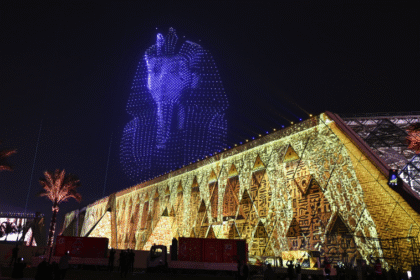
After two decades of anticipation, Egypt has opened one of the world’s most extraordinary cultural landmarks — the Grand Egyptian Museum (GEM). Standing near the legendary Pyramids of Giza, this architectural masterpiece marks a turning point in Egypt’s cultural and tourism landscape, blending history, innovation, and international collaboration.
A Monument of Global Heritage
The Grand Egyptian Museum covers more than 480,000 square meters, making it the largest archaeological museum complex in the world. Its design reflects harmony between the ancient and the modern — a dialogue between the geometric power of the pyramids and the light-filled elegance of contemporary architecture.
Inside, visitors can explore over 100,000 artifacts, many unveiled for the first time. The highlight is the complete collection of Tutankhamun’s treasures, presented in their entirety — over 5,000 objects offering a breathtaking glimpse into Egypt’s golden past.
Cultural Diplomacy Through Heritage
The museum’s creation involved extensive international cooperation, including partnerships with experts and institutions from Japan, Europe, and beyond. GEM is not only a national achievement but also a global project that unites nations through the shared value of cultural preservation.
It demonstrates how art, archaeology, and diplomacy can come together to build bridges of understanding between civilizations.
A Catalyst for Tourism and Global Exchange
The opening of the Grand Egyptian Museum is expected to revitalize Egypt’s tourism industry, attracting millions of visitors from around the world. With its immersive exhibitions, interactive technology, and breathtaking views of the Giza Plateau, GEM offers travelers an experience that connects them deeply to Egypt’s ancient soul while showcasing its modern creativity.
Beyond exhibitions, the museum features educational centers, theaters, gardens, and restaurants — creating a complete cultural destination. It will play a key role in positioning Egypt as a global hub for cultural tourism, fostering economic growth and cross-cultural dialogue.
A Living Bridge Across Time
The Grand Egyptian Museum is more than a place to look back — it is a living bridge across time. It celebrates humanity’s universal heritage and invites the world to rediscover the beauty, wisdom, and resilience of ancient Egypt.
Through this landmark, Egypt opens its doors not only to tourists, but to all who believe that culture and history can connect people beyond borders.