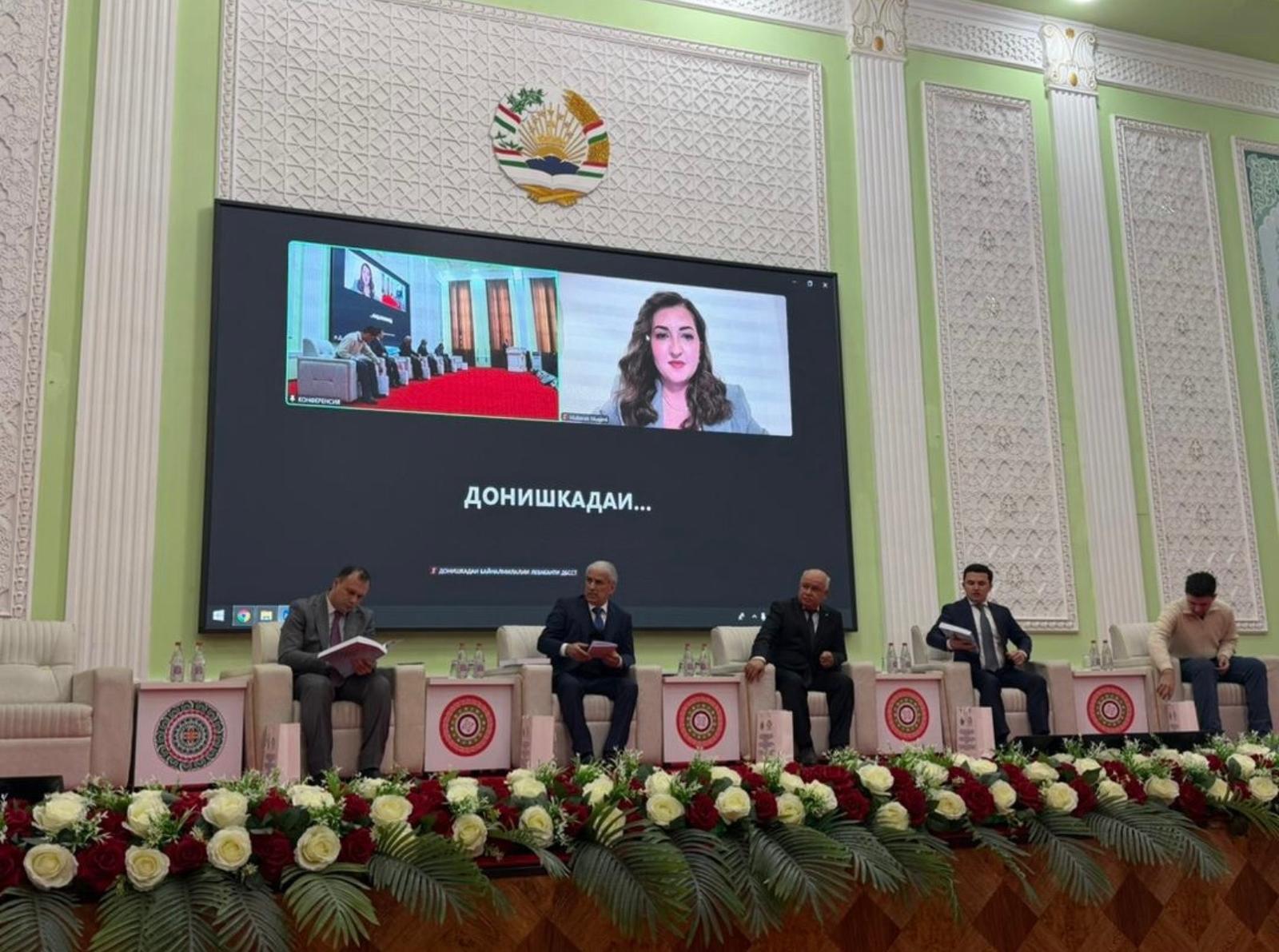

In December 2025, I had the opportunity to present my doctoral research at the International Scientific Conference on “Increasing Financial Literacy and Financial Education of the Population in the Conditions of the Digital Economy,” hosted by Kulob State University named after Ababdulloh Rudaki under the Ministry of Education and Science of the Republic of Tajikistan. The conference brought together academics, policymakers, financial institutions, and representatives of the National Bank and Ministry of Finance to discuss the future of financial and digital inclusion in Tajikistan.
My presentation addressed a question that is increasingly relevant not only for Tajikistan, but for many developing economies undergoing rapid digital transformation: As economies go digital, do women have the skills and opportunities to benefit or are they at risk of being left behind?
Digital Transformation and the Gender Question
Across Central Asia, digitalization is reshaping entrepreneurship, public services, and labor markets. Tajikistan has declared 2025–2030 as the “Years of Digital Economy and Innovation,” signaling a national commitment to modernization.
Yet digital transformation is not gender-neutral.
International evidence consistently shows that women especially those in developing and transition economies are less likely than men to use digital financial services, online platforms, or advanced digital tools. Despite representing nearly half of Tajikistan’s working-age population, women remain underrepresented in digital entrepreneurship.
This raises an urgent policy concern: Without targeted support, digitalization risks widening existing gender inequalities rather than reducing them.
Beyond Access: What Digital Literacy Really Means
A key finding of my research is that digital literacy is widely misunderstood.
Digital literacy is not simply owning a smartphone or having internet access. Drawing on UNESCO and the European Commission’s DigComp 2.1 framework, digital literacy includes the ability to:
- find and evaluate online information
- communicate and collaborate digitally
- create digital content
- protect privacy and ensure digital safety
- use technology strategically to solve real-world problems
Put simply, it is the difference between passively using technology and actively using it to create economic opportunity.
Insights from Women Entrepreneurs in Tajikistan
To explore how digital literacy influences women’s economic participation, I conducted a pilot survey with 30 women entrepreneurs across different regions of Tajikistan. The study integrates global digital competency frameworks with World Bank and UN Women indicators of economic empowerment, adapted to the local context.
The findings were clear:
- Women with higher digital skills reported stronger income growth, financial autonomy, and confidence in business decision-making.
- Social media and online communication tools enabled them to reach customers beyond their immediate communities.
- Significant gaps remained in areas such as digital security and content creation, with many women feeling uncertain about online risks and digital financial tools.
As one participant expressed:
“When I learned to use digital payments safely, it felt like not only my business grew, but I grew more confident as a woman.”
This reflects the central insight of the study: Digital literacy builds not only income, but agency.
Why This Matters: A Development Perspective
Using Amartya Sen’s Capability Approach, digital literacy can be understood as a capability that expands women’s freedom to choose, act, and participate economically. Feminist economics further highlights that when women gain digital visibility and independent income, social and household power dynamics begin to shift.
In Tajikistan, digital entrepreneurship is especially important. It allows women to participate economically while navigating local cultural and mobility constraints. Digital skills make this participation possible but only when paired with confidence, safety, and institutional support.
Policy Implications
The findings point to clear priorities for policymakers and development actors:
- Integrate digital literacy into national gender and economic strategies, not treat it as a standalone technical skill.
- Combine digital skills training with financial literacy and cybersecurity, especially for women entrepreneurs.
- Use public–private partnerships to expand access to digital tools and safe online financial services.
- Strengthen evidence-based policy design, recognizing that digital empowerment must be measured, not assumed.
A First Step Toward Broader Research
This pilot study is the initial phase of a larger doctoral project that will expand to a national sample of women entrepreneurs in Tajikistan. Although exploratory, the early results already suggest a powerful conclusion:
Digital empowerment of women is not only a matter of gender equality, it is a strategy for inclusive and sustainable economic development.
As Tajikistan and other Central Asian countries advance their digital agendas, ensuring that women progress from simple access to genuine agency will be essential for building resilient, equitable, and future-ready economies.