
Introduction
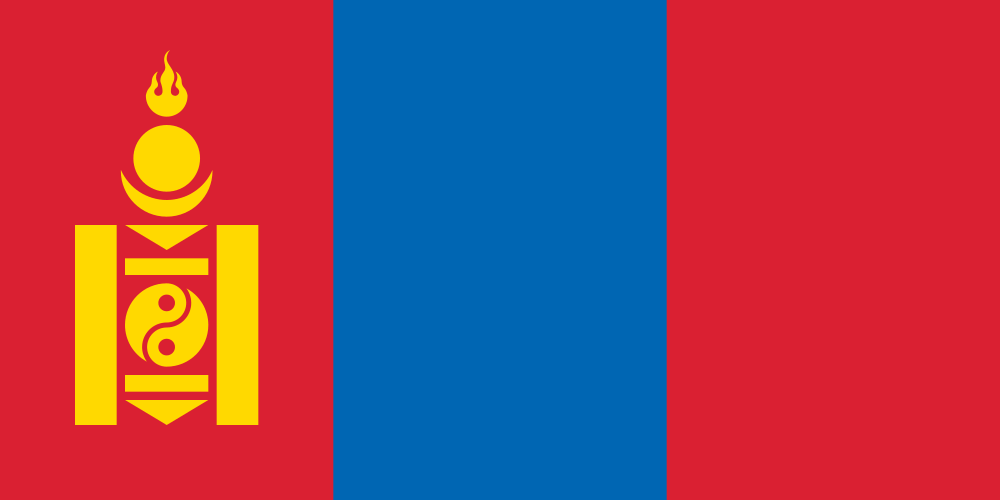
More than a century ago, Mongolia made a strong commitment to freedom, socioeconomic and political rights of its population, and embarked on a path towards building a contemporary state within a system of social transformations. This helped the nation evolve from its previous organisation as a Buddhist monarchy to a structure of modern governance, combining both drive for future achievements, in addition to a profound admiration for its history and traditions, and keeping its past embedded in its memory. The Republic Day, celebrated on November 26, is a commemoration that the Mongolians not only stood the test of time to preserve their statehood and heritage, but also integrated themselves into the modern era with courage and determination to bring their own vision into the world of tomorrow.
In recent years, Mongolia’s creative and industrial landscapes have drawn international attention as a compelling intersection of heritage and sustainability. Shaped by a way of life rooted in the relationship between the human, the animal, and the environment in which they co-exist, Mongolian practices reflect a deep respect for natural rhythms and long-term stewardship of the land. Passing and disseminating the intergenerational knowledge and traditions have been key to ensure that the ideas accumulated throughout time are well kept and are integrated within modern times and its challenges, particularly climate change, ecological disruption, and desertification. In a global context increasingly defined by rapid consumption and environmental strain, Mongolia offers an alternative narrative, one that frames sustainability not as a marketing trend, but as a lived principle embedded in daily life, craftsmanship, and identity.
Nomadic Culture as a Living Heirloom
For most of us living here in Europe, it is more than challenging to imagine the life of Mongolian pastoral nomads, not only because of the difference in culture, but because globalisation is something that we created and adopted with relative ease. Globalisation, although having its positive aspects, has not been as kind to native Mongolian traditions, bringing undesired changes and struggles to their lifestyle. A clear crossroad began to surface: either this lifestyle needs to wane, swallowed by modernity, or it must be integrated and become part of the future.
Traditional livestock herding lies at the heart of Mongolian identity, shaping social life, economic rhythms, and spiritual traditions. Each animal carries its own cultural meaning: goats and sheep form the backbone of daily subsistence and textile production; yaks symbolize endurance and are revered for surviving the harshest winters; horses embody freedom, mobility, and martial heritage; while Bactrian camels represent resilience and long-distance trade across the Gobi. Herding is more than an economic activity; it is a worldview rooted in harmony with the land, seasonal movement, and interdependence between people and animals. For centuries, these herds have anchored Mongolia’s nomadic ethos, influencing music, mythology, and even state symbolism, and they remain a living link between Mongolia’s past and its evolving modern identity.
The connection of Mongolians with cashmere, yak wool, and camel fibers stems not only from their quality, but also from the authenticity as well as the heritage embedded in their production. These centuries-old practices strengthen Mongolia’s branding in international markets, where consumers increasingly seek ethically sourced, culturally rooted, and environmentally mindful goods. This is specifically true of the European market, as diversity, culture, and consciousness of history are among the bloc’s most highly acclaimed values.
At the same time, the image of Mongolia as a land of open steppes, horseback culture, and resilient pastoralism enhances its soft power, attracting tourism, investment in sustainable supply chains, and diplomatic interest. Thus, cultural heritage is not just a legacy, but it actively shapes how Mongolia participates in the global economy and how the world, in turn, imagines Mongolia.
Environmental Concerns: Desertification and Climate Stress
Mongolia’s grasslands, and henceforth the culture itself, are facing unprecedented environmental stress, with climate change accelerating desertification and threatening the foundations of nomadic life. Rising temperatures, shifting rainfall patterns, and more frequent droughts have left vast areas of pastureland degraded, while the harsh dzud winters, the cycles of extreme cold following dry summers, have become increasingly severe, leading to massive livestock losses. These ecological pressures strain both herder communities and the fragile ecosystems they depend on, disrupting traditional migration routes and undermining long-standing patterns of pastoral resilience. At the same time, market-driven demand for cashmere has encouraged the expansion of goat herds, contributing to overgrazing and further weakening soil stability. Together, these dynamics create a feedback loop of environmental decline that not only threatens rural livelihoods but also raises urgent questions about how Mongolia can balance economic opportunity with sustainable land stewardship, while diminishing its reliance on its natural resources and utilising them in a much more efficient way.
Contemporary Challenges: Economic Pressures and Demographic Trends
Combined with environmental degradation, the living heritage of nomadic culture and the pursuit of sustainable fabric production are further strained by rising economic pressures, which are intensified by the country’s substantial reliance on mineral exports such as gold, copper, iron, coal, and other critical raw materials. Such unsustainable practices puts the economy in a disadvantaged position, in an age where the world seems to be shifting towards regionalisation, and each region appears to be pursuing its own version of autonomy from the rest. Specifically in the European Union, the agenda has changed much in the last ten years. In contrast, instead of centering around securing and building partnerships, aligning values and pursuing climate neutrality, gender equality, and the rule of law, nowadays the talk continuously gravitates towards defence, security, and resilience dimensions of the objectives mentioned above. Due to these circumstances, a very practical emphasis must be put on the trade relations between the EU and third countries, to prioritise sustainability in order to make the relationship just and fair, and not allow one party to benefit at the expense of the other.
Sustainable manufacturing and trade are but a part of the full story. For Mongolia, it is clear that relying on the portfolio that its trading partners are already familiar with cannot be a winning strategy. Therefore, an expansion is vital, and economic diversification is the approach the country’s businesses are employing in order to make sure that trade does not remain limited to certain sectors and to pursue more complete integration of their working population in global supply and value chains. For the European Union, this is most welcomed, because at times of uncertainty, it is important to collaborate, invest, and partner with the emerging stars, as they will be feeling the shocks of the geoeconomic volatility to a lesser extent, as they are not as interconnected in the global chains yet.
Mongolia–EU Partnership: Diplomacy, Trade, and Shared Priorities
Against this backdrop, the European Union has become an important partner in Mongolia’s efforts to advance sustainable development, strengthen governance, and build resilience against environmental pressures. Through the EU-Mongolia Partnership and Cooperation Agreement, Brussels supports initiatives aimed at improving public administration, enhancing transparency, and promoting rule-of-law reforms that underpin long-term stability. To stimulate regenerative economic practices, EU programs fund projects that help Mongolia transition toward greener models: from supporting renewable energy development in rural areas to improving land management practices that combat desertification. Environmental resilience is a key pillar: the EU provides technical assistance to monitor climate impacts, supports sustainable herding initiatives that reduce overgrazing, and invests in community-based adaptation strategies to mitigate the effects of dzud and drought. These efforts position the EU not just as an economic partner, but as a strategic ally in Mongolia’s pursuit of a more renewable and balanced future.
Sustainable Trade and Mongolia’s Textile Sector
The European Union offers significant market opportunities for Mongolia’s ethically sourced and traceable textiles, particularly as European consumers increasingly demand sustainability and transparency in global supply chains. This shift creates space for Mongolian producers to differentiate themselves through heritage-based, low-impact fibers, especially when these products can be traced back to responsible herding practices. Small-scale producers and rural cooperatives stand to benefit the most: by organising collectively, they can improve quality control, share resources, and reach European buyers who value authenticity, fair production standards, and community-level impact. European companies and certification systems further reinforce these opportunities by offering frameworks for animal welfare, environmental stewardship, and supply-chain transparency, making it easier for Mongolian textiles to meet premium-market requirements.
The Path Forward: Aligning Heritage with Sustainability
The most important question is how Mongolia can be certain that it is selecting the best way forward. In spite of being more interconnected than ever, the world today is equally as turbulent and volatile. The interdependencies created by global markets, business, and politics have resulted in a system where uncertainties become increasingly harder to foresee, and risks more difficult to measure. One thing is certain: carelessness about tomorrow will not make us sleep better tonight. Sustainability should be prioritised by countries in order to ensure that their existence does not rely on prosperity, which feeds upon its own foundations.
Transitioning from primary fossil and mineral exports is a long and strenuous process, but certainly a rewarding one: Mongolia must find a solution on how to protect its nomadic heritage while ensuring that this heritage will not survive just to face a grimmer existential threat in later decades. Consolidating its sustainable fashion industry is an ambitious project, but it features all the preconditions for success: the demand of the European buyer is there, as is the value of the fabrics sourced locally, granting meaning to the lives of pastoral nomads, assuring them they are not a historical artefact, but they can be an integral part of the modern global economy.
Fashion should be but a reminder that when people partner together in the spirit of friendship and creativity, there are no boundaries as to what and how heritage can be used. Often, the approach to the past is to scrap it away, only to return and mourn its loss later, while trying to reproduce it, almost always unsuccessfully. Sustainable agriculture and rural development, in addition to clean energy and climate resilience, are possible future streams for cooperation between Mongolia and the EU, to seize the potential of Mongolian determination for diversification, environmental responsibility, and international partnerships.
Conclusion
At 101 years as a republic, Mongolia stands not merely as a nation shaped by its past, but as one actively redefining its future. Its strength lies in a rare balance: a profound respect for heritage paired with the courage to transform in the face of environmental, economic, and geopolitical challenges. As desertification, market pressures, and global instability test traditional ways of life, Mongolia’s response has not been to abandon its identity, but to reinterpret it through innovation, sustainability, and engagement with potential partners not only regionally, but internationally and using modern approaches and technologies to shrink temporal and spatial distances. The evolving partnership with the European Union illustrates how shared values of environmental responsibility, ethical trade, and resilient development can produce meaningful and mutually beneficial progress. Continuing on this path with the same determination, Mongolia will not only preserve its living traditions, but transform them into a foundation for leadership in sustainable development and cultural diplomacy on the global stage.