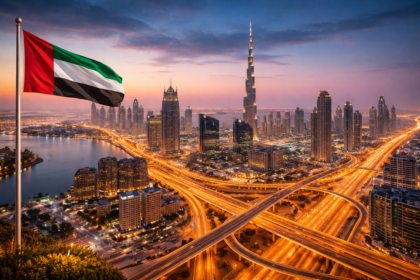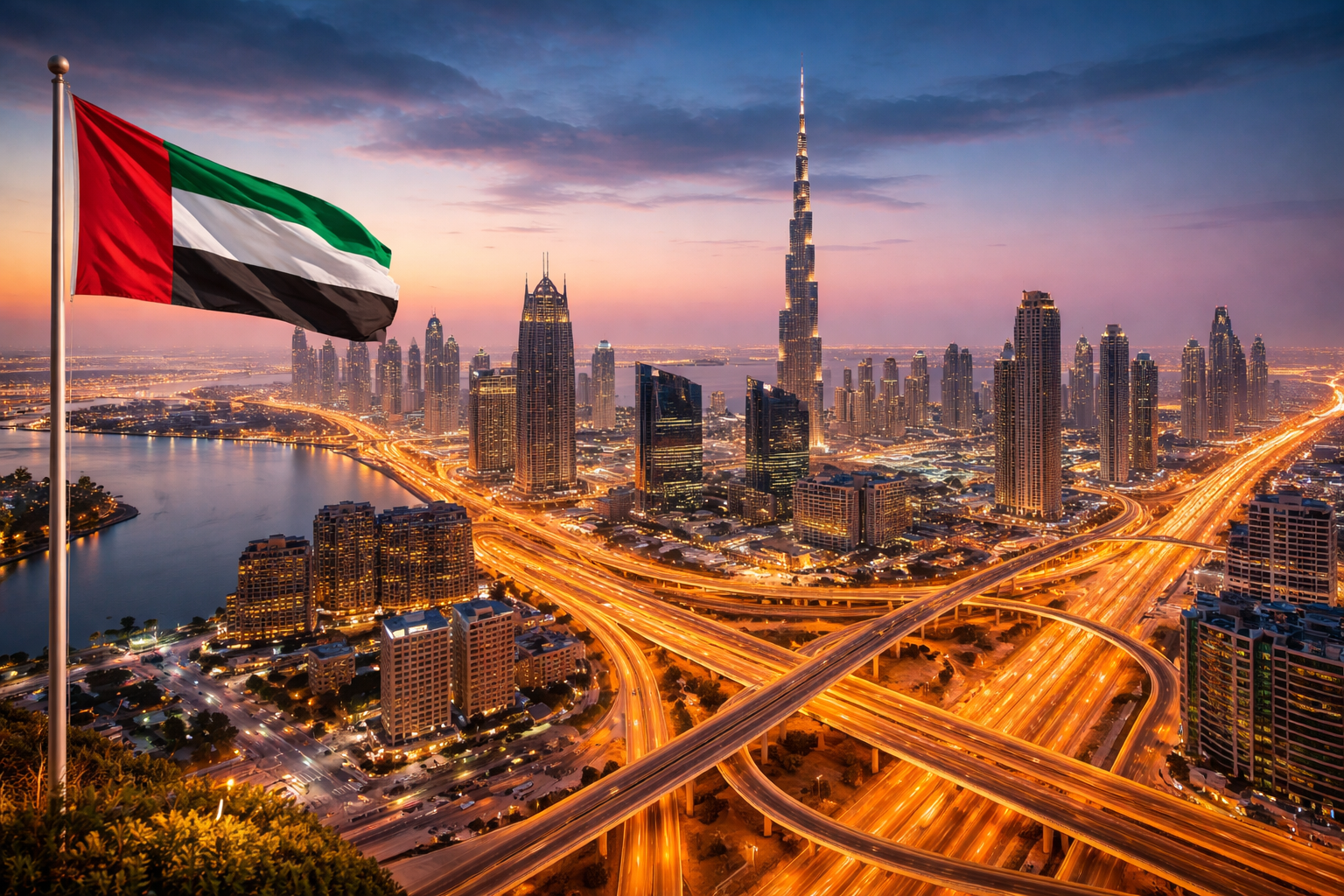

The United Arab Emirates has, over the past few decades, developed into one of the most recognisable and dynamic countries in the global landscape. Since its formation in 1971, the country has undergone a period of rapid and sustained transformation, evolving from resource-based economy into a globally connected and diversified state with a clear international presence. This trajectory reflects not only economic growth, but a consistent alignment between long-term vision, governance, and global engagement, positioning the UAE as a confident and forward-looking actor in an increasingly interconnected world.
Economic Transformation, Governance, and Cultural Positioning
Following its establishment, the UAE laid the foundations for development through strategic investment in infrastructure, institutions, and economic capacity. Over time, this foundation has expanded into a diversified economic structure, with key sectors including aviation, logistics, financial services, tourism, and advanced technologies. Cities such as Dubai and Abu Dhabi have become globally recognised hubs, facilitating trade, attracting investment, and connecting markets across regions.
This transformation has been supported by a governance approach that emphasises long-term planning, coordination, and policy continuity. The alignment between economic priorities, infrastructure development, and regulatory frameworks has created a stable and predictable environment, reinforcing confidence among international partners while maintaining the flexibility required to respond to evolving global dynamics. At the same time, this approach reflects a broader national vision in which economic development is closely linked to long-term sustainability and strategic positioning.
Alongside economic progress, the UAE has maintained a clear focus on cultural identity and international engagement. Investments in cultural institutions, combined with its role as a host of global events and exchanges, position the country as a meeting point between regions, cultures, and ideas. What stands out is the UAE’s ability to integrate economic growth, cultural preservation, and global connectivity within a single, coherent development strategy.
Global Context, Strategic Connectivity, and Stability
In a global environment shaped by increasing interdependence and shifting economic dynamics, connectivity has become central to both growth and stability. A key element of the UAE’s development has been its sustained focus on infrastructure and international connectivity. The country has positioned itself as a strategic gateway between Europe, Asia, and Africa, facilitating the movement of goods, capital, and services while reinforcing its role within global trade and investment networks.
Recent developments continue to reinforce this trajectory. The second edition of the Abu Dhabi Infrastructure Summit, scheduled from 12 to 14 May 2026 under the theme “Urban Evolution: A New Vision for Cities and Our Way of Life”, reflects a forward-looking approach to urban development, sustainability, and quality of life. In parallel, Dubai’s approval of a Dh1 billion economic support package highlights a proactive approach to strengthening business resilience and maintaining economic momentum. Together, these initiatives demonstrate how infrastructure investment and economic policy are used not only to drive growth, but also to support long-term planning and economic resilience.
From a European perspective, the United Arab Emirates has become an increasingly important partner for the European Union in areas such as trade, investment, energy cooperation, and global supply chain resilience. As the EU continues to diversify its external economic relations and strengthen engagement with key global partners, the UAE’s role as a key economic hub has gained growing relevance within the EU’s broader external policy framework.
Within the broader regional and international context, this approach is accompanied by a steady emphasis on institutional stability, strategic coordination, and continuity. The UAE’s policy framework reflects a high level of organisation and preparedness, supporting continuity and operational reliability across key sectors such as transport, trade, and services. This consistency reinforces its position as a dependable partner within the international system, while also supporting confidence among global stakeholders.
At the same time, the UAE’s engagement within the region reflects a broader understanding within Gulf diplomacy that long-term stability is closely linked to continuous dialogue and engagement between actors, even in situations characterised by political differences. This emphasis on engagement, combined with economic openness and connectivity, contributes to a model in which stability is supported not only through internal capacity, but also through sustained interaction at the regional and international level.
Conclusion
The United Arab Emirates demonstrates how a clear long-term vision, supported by coordinated governance and sustained investment in connectivity, can shape a country’s role within the global system. Its development reflects a continuous effort to align internal priorities with external opportunities, while maintaining consistency, confidence, and strategic direction in a changing environment. As global dynamics continue to evolve, this integrated approach will remain central to its ability to sustain growth, strengthen partnerships, and reinforce its position as a globally connected and forward-looking state.