

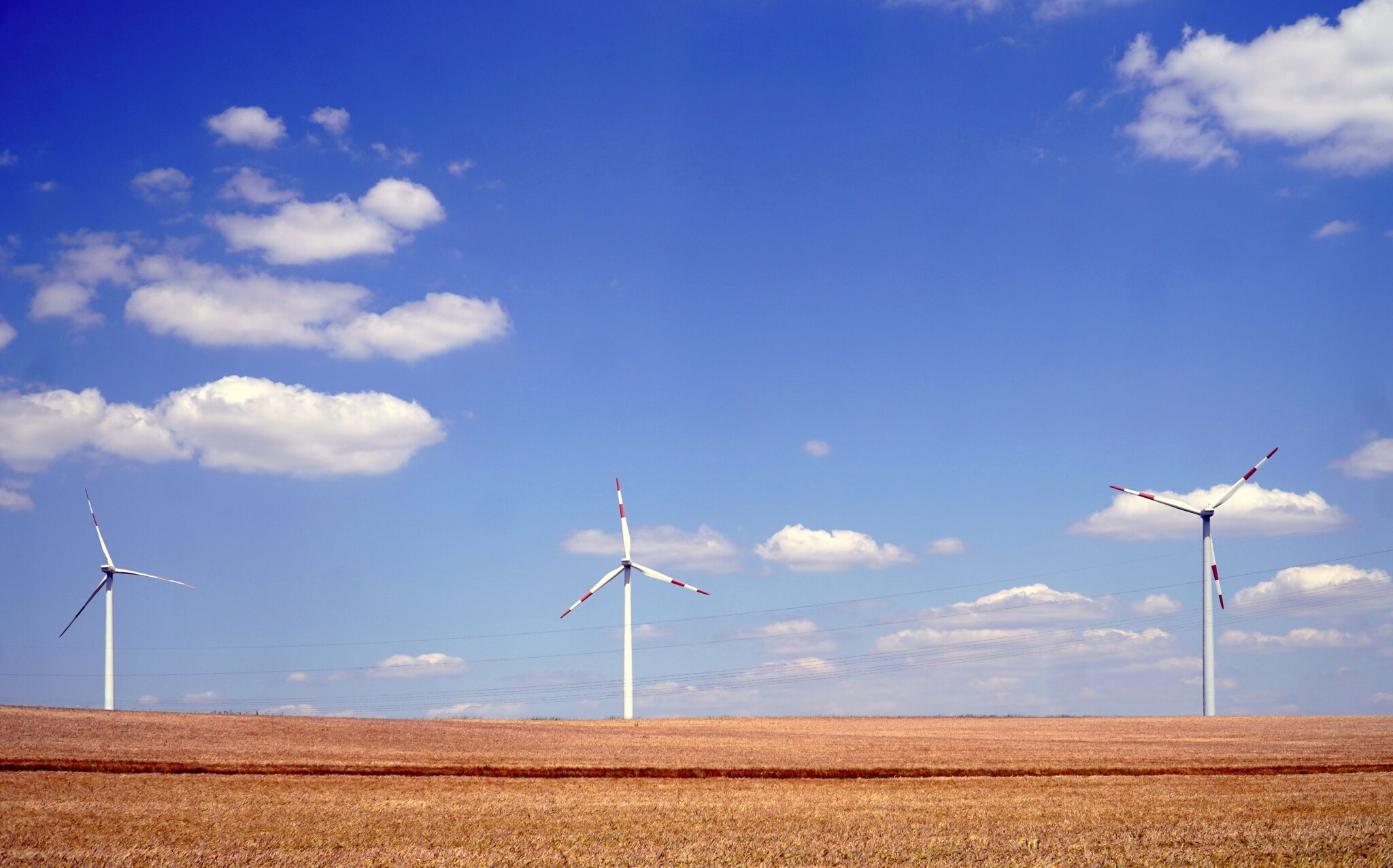

Energy Policy at a Crossroads: Navigating the EU’s Climate Commitments
Despite the recent geopolitical and security challenges confronting the European Union, tackling climate change, remaining committed to the Paris Agreement, and adhering to the objectives set out by the European Green Deal continue to rank among the strongest priorities of the bloc’s energy policy. This determination, however, has come at a significant cost. European consumers have been most affected by the burden, as energy transition efforts, price volatility, and speculation driven by conflict and uncertainty have reshaped energy markets over the past decade, most noticeably in Western Europe.
- Energy Policy at a Crossroads: Navigating the EU’s Climate Commitments
- Energy Pluralism as a Strategic Response
- Central Asia’s Strategic Adaptation to a Changing Energy Landscape
- Shared Vulnerabilities, Converging Priorities
- Opportunities for EU-Central Asia Energy Alignment
- Investment, Infrastructure, and Political Will
- Social Equity and Inclusive Transitions
- The Role of International Organisations and Normative Balance
- Conclusion: Energy Pluralism as a Framework for Resilience
In this context, renewable energy has emerged as the most logical policy response to the uncertainty identified by the EU. Greater independence in energy production strengthens the Union’s bargaining power, strategic autonomy, and resilience across policy domains. Yet an increasingly pressing question remains: is such a level of autonomy realistically achievable in the foreseeable future, given the structural barriers and substantial investments required to translate ambition into reality?
The EU’s priorities have shifted dramatically over the past five years, shaped by the pandemic and the war in Ukraine. This persistent turbulence, and the difficulty of remaining on a stable long-term trajectory, has complicated sustained progress in the energy sector. The question therefore becomes existential: can the EU remain on course toward its ambitious climate goals, or will it be forced to revert to short-term crisis management, risking renewed dependence on external suppliers and increased vulnerability to external demands?
Energy Pluralism as a Strategic Response
It is under these pressures that a new approach has begun to take shape. Energy pluralism has emerged as a response to reconcile the EU’s long-term ambition for a net-zero future with immediate challenges such as rising costs for consumers and increasingly polarised political debates at both national and EU levels.
A balanced energy mix, which combines renewable sources with conventional fossil fuels aims to diversify energy supply portfolios while enhancing economic resilience. Its central benefit lies in reducing exposure to external shocks and strengthening autonomy without abandoning longer-term climate objectives. The importance of autonomy has only recently gained prominence in political discourse, notably through the Draghi report on the future of EU competitiveness, which highlighted the shortcomings of earlier policy decisions.
Current circumstances have made it clear that past strategies are no longer sufficient. In the coming decade, the EU must prioritise the development of durable partnerships to secure economic momentum, societal well-being, and global relevance. As political and security tensions escalate, the Union cannot afford isolation; instead, it must seek to maximise its influence and ensure that its voice remains central in global energy governance.
Central Asia’s Strategic Adaptation to a Changing Energy Landscape
Against this backdrop, Central Asia has moved swiftly to adapt to evolving global needs. Countries in the region have increasingly coordinated their efforts to pursue renewable energy, both to diversify their trade portfolios and to strengthen regional cooperation. Over the past decade, purchasing power and standards of living have nearly doubled, drawing heightened international attention and reinforcing Central Asia’s position as a valuable strategic partner.
These economic gains have been complemented by deliberate diplomatic engagement, enabling the region to establish stable political and economic relations with a wide range of international actors. At a time marked globally by rising isolationism, regionalisation, and competition, Central Asia’s ability to expand its partnerships stands out as a notable achievement.
The region’s turn toward renewable energy is neither accidental nor surprising. Smaller economies are particularly vulnerable to overdependence on single resources, and in Central Asia, exports of oil, gas, and critical raw materials have long dominated economic structures. While these resources offer short-term leverage, they also expose economies to sustainability risks and constrain long-term independence. In periods of heightened energy uncertainty, exporters may be tempted by immediate gains, often at the expense of a coherent and resilient long-term strategy.
Shared Vulnerabilities, Converging Priorities
Climate vulnerability, desertification, and environmental degradation have further reinforced the consensus among Central Asian governments that renewable energy and net-zero objectives cannot be postponed. The EU, for its part, has long positioned itself at the forefront of international climate discourse, shaping regulatory and legislative frameworks and setting global standards.
Yet as global uncertainty has deepened, the emphasis on climate leadership has increasingly competed with the need to restore European competitiveness. These priorities need not be mutually exclusive. Resilience, competitiveness, and long-term partnership-building can coexist, provided that shared vulnerabilities and interests are identified and actors commit to pursuing mutually beneficial outcomes.
Opportunities for EU-Central Asia Energy Alignment
The EU and Central Asia share multiple avenues for aligning their energy policy priorities. The EU remains a global leader in research and development of green technologies and net-zero solutions for both industry and communities. Central Asia, meanwhile, possesses the potential to rapidly close the gap, supported by a strong base of qualified human capital and existing infrastructure. This creates fertile ground for the exchange of innovation, best practices, and technical expertise.
Academic cooperation further reinforces this alignment. European and Central Asian universities are increasingly interconnected through student and academic mobility schemes, fostering long-term relationships that extend beyond education into business, entrepreneurship, and innovation. These institutional ties provide flexibility and adaptability that can support deeper economic and technological cooperation.
In the realm of regulation and governance, the EU continues to set global benchmarks for clean energy standards. While such regulation has been criticised for constraining competitiveness, it has also enabled the so-called Brussels effect, spreading norms and rules far beyond Europe’s borders. Recent discourse has shifted toward balancing regulatory ambition with reduced administrative burdens, seeking to boost competitiveness without eroding the EU’s normative influence in green innovation.
Investment, Infrastructure, and Political Will
Investment in energy infrastructure remains one of the most contentious aspects of the transition. With growing pressure to increase defence spending, the political appetite for allocating funds to energy grids and logistics has weakened. Renewable energy investment has, in some cases, lost urgency as other priorities take precedence.
Reversing this trend requires demonstrating the strategic value of energy infrastructure. Readiness to invest would signal genuine commitment to cooperation between the EU and Central Asia, while also reassuring European policymakers and citizens that the net-zero transition is not an exclusively European burden, but a shared international endeavour.
Social Equity and Inclusive Transitions
In Central Asia, persistent social inequalities and uneven wealth distribution remain pressing challenges. Long-standing reliance on primary exports has concentrated wealth within narrow segments of society, prompting governments to seek more inclusive growth models. Promoting innovation, entrepreneurship, and emerging business sectors has become central to addressing these structural imbalances.
The green transition itself has faced criticism for potentially creating new forms of inequality. The EU has responded by actively exploring ways to manage the transition without replacing one monopoly with another. Sharing this experience with Central Asia represents a valuable foundation for cooperation, enabling both regions to mitigate social risks while amplifying positive spillover effects across policy areas.
The Role of International Organisations and Normative Balance
International organisations can play a crucial role as policy advisors, mediators, and facilitators in advancing green transitions through bilateral and multilateral cooperation. Ensuring the inclusion of Central Asian voices in these forums enhances legitimacy, eases business operations, facilitates knowledge transfer, and strengthens diplomatic relations.
Such inclusivity also helps counter perceptions of “green colonialism,” a criticism frequently levelled at the EU for attempting to export its own policy models in pursuit of foreign policy objectives. Reciprocal learning, where solutions developed in Central Asia inform EU practices can further reinforce the collective pursuit of net-zero economies.
Conclusion: Energy Pluralism as a Framework for Resilience
Energy pluralism, understood as the strategic combination of conventional fossil fuels with innovative, renewable, and state-of-the-art energy sources, offers a pragmatic framework for strengthening resilience in an increasingly volatile energy landscape. While sourcing, transportation, and storage remain technical challenges, energy pluralism extends beyond infrastructure. It serves as a political and diplomatic concept, promoting a balanced and cooperative approach to managing volatility, uncertainty, and security risks.
As such, energy pluralism provides a conceptual bridge between the EU’s balanced energy mix and Central Asia’s renewable ambitions, aligning immediate needs with long-term transformation through partnership rather than prescription.



Hello friends, its wonderful piece of writing on the topic of educationand entirely defined, keep it up all the time.